St. Charles, O'Fallon, and St. Peters Don't Have a Price Gap. They Have an Age Gap.
August 27, 2026
August 27, 2026
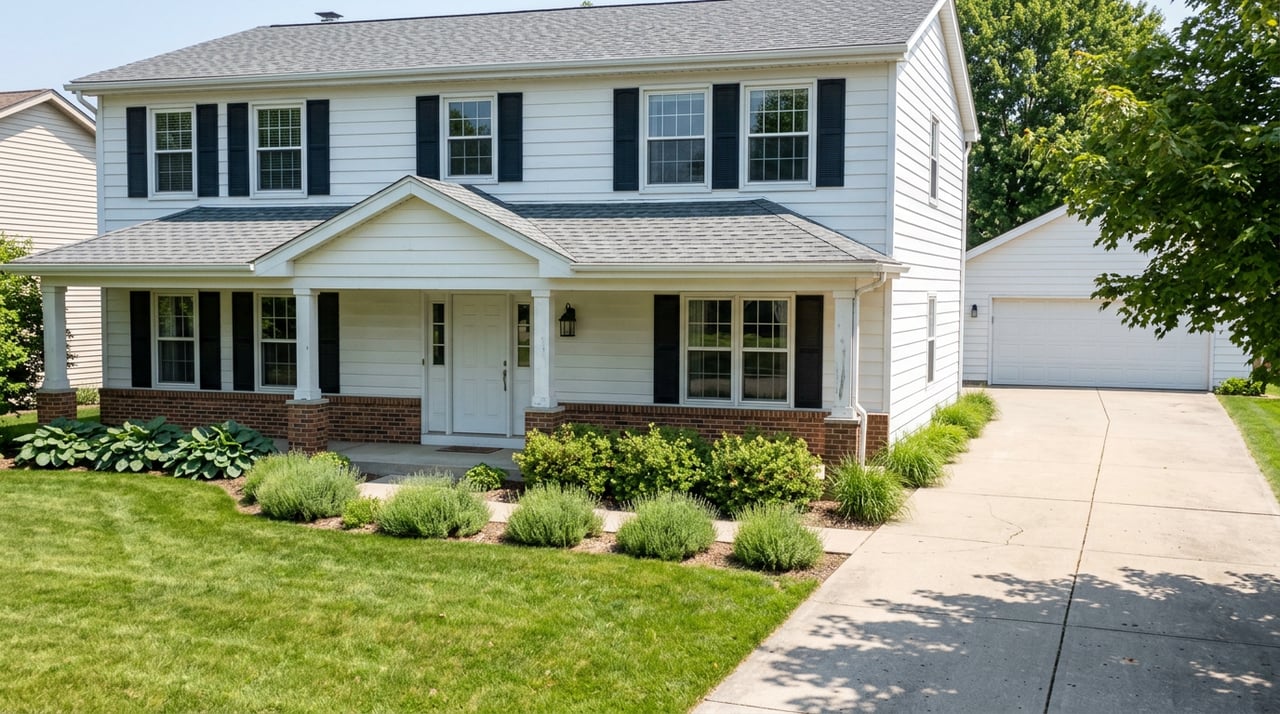
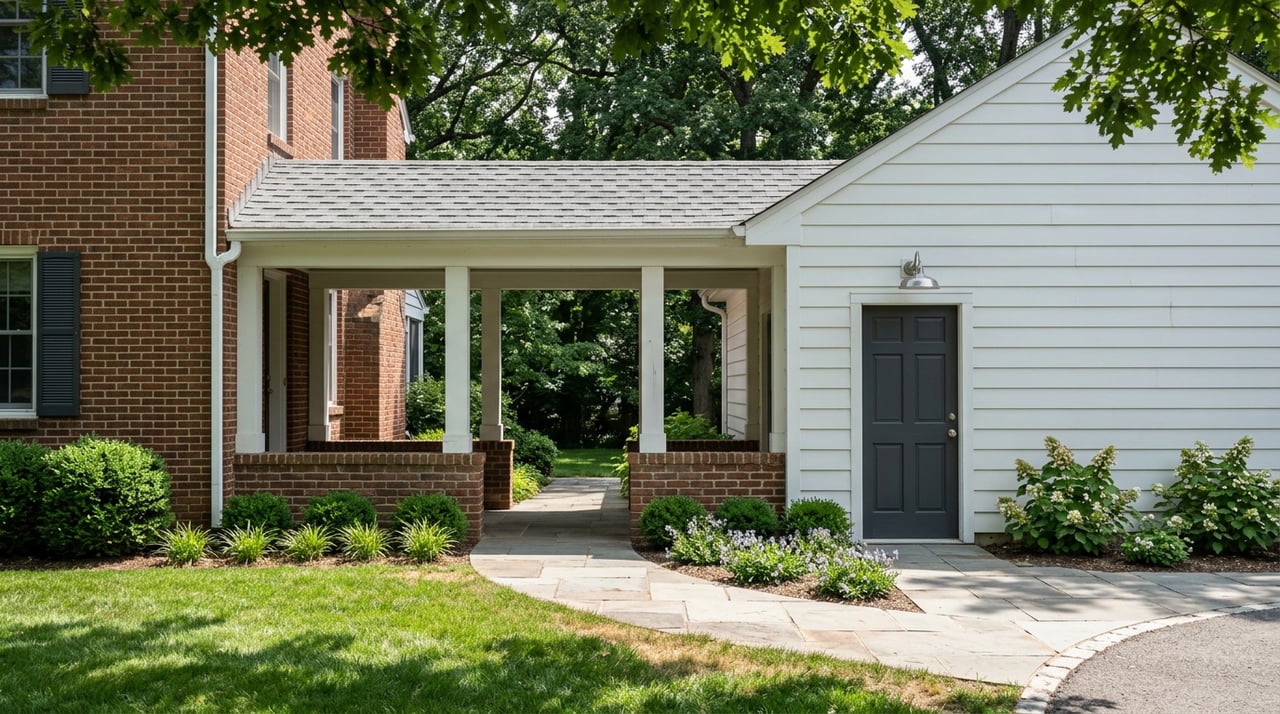
Two houses sit a few minutes apart in the same city, inside the same school boundaries, close enough to the Missouri River that you could walk to it from either driveway. One is a brick cottage in Frenchtown with nine-foot ceilings and a build date measured in centuries. The other is new construction with a builder's warranty and a sales office. The price difference between them isn't a rounding error. It's closer to a quarter million dollars.
That gap sits inside a single city, St. Charles, which means it can't be explained by the thing most buyers assume explains everything: location. If you've been comparing St. Charles, O'Fallon, and St. Peters by median price the way most portals present it, you've been reading a number that measures something narrower than it looks like it measures. It isn't ranking cities. It's ranking construction vintage, and the cities just happen to carry different amounts of each.
Pull up listings in all three cities right now and a ladder appears almost immediately. In July 2026, homes listed in St. Peters carried a median asking price in the $335,000 to $339,000 range. A month later, St. Charles listings were sitting at a median list price near $400,000. O'Fallon topped the group in early August 2026, with roughly 267 active listings carrying a median list price of $435,000 and an average of $219 a square foot.
Read quickly, that looks like a straightforward story: St. Peters is the value play, St. Charles is the middle ground, O'Fallon is the premium suburb. It's the story most buyers walk in with, and it isn't wrong exactly. It's just incomplete in a way that will cost you money if you shop by city name instead of by what's actually for sale.
Start with a number that should make anyone comparing these cities pause. Countywide, the median list price reached $425,000 in May 2026, a 16.44 percent jump from May 2025's $365,000. The median sold price that same month was $385,000, up only 4.05 percent year over year. Sellers raised their asking prices four times faster than buyers agreed to pay them.
That gap between what sellers are asking and what buyers are closing at tells you the county's list-price ladder is partly a confidence measure, not a value measure. Some of what separates O'Fallon's median from St. Peters' median is genuine difference in what's being built and sold. Some of it is sellers testing the market at a number the data doesn't yet support. Treating the list price gap between cities as a precise ranking of worth is treating seller optimism as fact.
Frenchtown is the clearest proof that vintage, not city line, is doing the real work. Recent listing data for the district puts the median sale price near $195,000, with the typical home spending around 197 days on the market before it closes. That's a long timeline for a neighborhood within walking distance of the Katy Trail, the Missouri River, and Main Street. And yet homes that do sell there have recently closed at roughly 8 percent over their asking price once a buyer commits. Thin inventory and real demand are both true at once. There just isn't much of it to sell.
A few minutes away, inside the same city limits, sits New Town at St. Charles, the new-urbanist community developer Greg Whittaker built around a network of canals and squares modeled on Seaside, Florida. Its eleventh phase was under construction as of late 2025, with new homes still going up along the waterways. Closer still to Frenchtown, McBride Homes is building Elm Crossing, a 33-homesite enclave off Elm Street priced from the $320s into the $500s.
That's the whole thesis in one city. A quarter-million-dollar home and a $195,000 home can sit a few blocks apart, in the same school district, with the same proximity to the same river, because one was built decades before the other and the market prices that difference far more aggressively than it prices the address.
O'Fallon's higher citywide median isn't a verdict on the city being inherently more desirable than its neighbors. It's a function of how much brand-new inventory is moving through the pipeline there right now. Streets of Caledonia, a roughly $400 million project from Lombardo Homes and Fischer Homes, is planning about 657 new single-family homes and townhomes on land at the intersection of Interstate 64/40 and Highway DD. In neighboring Dardenne Prairie, Inverness is a 106-acre, 266-homesite community from McKelvey, Fischer, and Lombardo homes near Bryan and Feise roads. Not far away, the Harvest at Hopewell development, an 896-home project along Highway N, has been building out nearby.
That kind of volume doesn't happen without friction. As recently as May 2026, O'Fallon's city council voted down a proposed subdivision, then reversed itself weeks later and approved it. Growth on this scale gets contested at every meeting, and the median price you see on a portal is the output of hundreds of decisions like that one, not a single verdict on the city's character.
The practical takeaway isn't that one city is better than another. It's that the city name on the listing tells you less than the year on the inspection report.
If you're weighing a historic property against new construction, the real question isn't which city wins. It's whether the work already done inside an older home, the kitchen, the mechanicals, the finishes, closes the gap that its build date opened. That's a harder read than a median price, and it's exactly the kind of read worth getting a second opinion on before you write an offer.
Does a lower median price in St. Peters mean it's a weaker market than St. Charles or O'Fallon? Not necessarily. St. Peters' lower median largely reflects a smaller share of new-construction and luxury inventory pulling the number up, not weaker buyer demand. All three cities have shown fast-moving, competitive conditions this year.
Should I trust the list price when I'm comparing these three cities? Treat it as a starting point, not a verdict. The gap between countywide list price growth and sold price growth this spring shows list prices can run ahead of what the market is actually paying.
Is an older home in St. Charles a bad long-term buy compared to new construction? Not automatically. Slow days-on-market in a district like Frenchtown reflects thin inventory, not lack of demand, and homes that do sell there have recently closed above asking. The value depends heavily on what's been updated inside.
If you're trying to figure out what a specific home's age and condition actually mean for its value in this market, that's the kind of judgment call worth making with someone who looks at finishes and systems for a living, not just comps. Christine Neskar works across St. Charles, O'Fallon, St. Peters, and the surrounding suburbs, and can walk you through what a property's vintage is really costing or earning you before you make an offer.
Stay up to date on the latest real estate trends.
With decades of experience, proven negotiation skills, and a deep understanding of the St. Louis market, this professional guides clients through smooth, successful real estate journeys.