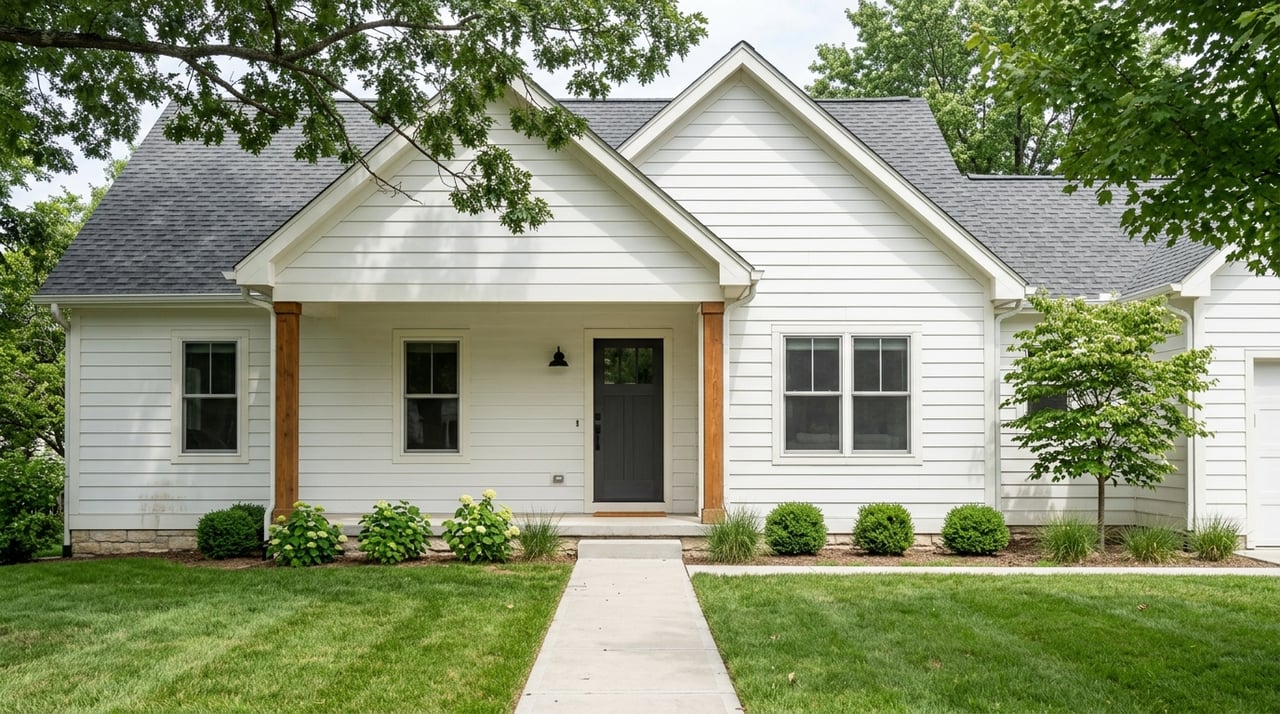
Wildwood vs Chesterfield: Choosing Your Next Home
May 7, 2026
May 7, 2026
Trying to choose between Wildwood and Chesterfield for your next home? It is a common decision for buyers in western St. Louis County because both cities offer strong appeal, but they deliver very different day-to-day experiences. If you are weighing privacy, convenience, home style, recreation, and market conditions, a side-by-side look can make your decision much clearer. Let’s dive in.
If you are deciding between these two communities, the biggest difference is often how you want your life to feel once you move in. Wildwood offers a more spread-out setting with substantial open space, while Chesterfield tends to center around convenience, retail access, and the I-64 corridor.
Wildwood spans 68 square miles and includes 11 square miles of publicly held open space. Chesterfield planning materials emphasize the I-64 corridor and Chesterfield Valley, which shapes the city’s more amenity-dense, corridor-oriented feel. In simple terms, Wildwood often fits buyers looking for breathing room, and Chesterfield often fits buyers who want more nearby options in a more conventional suburban pattern.
Wildwood’s geography plays a major role in how it lives. The city’s roadway network centers on Highway 100 and Highway 109, and those routes connect drivers to I-64 and I-44.
That layout, combined with extensive open space, gives Wildwood a more natural and spread-out character. If you picture larger lots, wooded surroundings, and a little more separation between homes and commercial areas, Wildwood may feel like a better match.
Chesterfield is more closely tied to the I-64 corridor, especially around Chesterfield Valley. That practical layout can be appealing if your routine includes regular highway travel, shopping stops, dining out, or access to a wider mix of businesses and services.
For many buyers, this creates a more convenience-driven lifestyle. You may find that Chesterfield better supports a schedule built around commuting, errands, and frequent access to retail and recreation in one general corridor.
One of Wildwood’s clearest distinctions is its formal support for larger-lot development. The city code defines large-lot subdivisions as single-family subdivisions where all lots are at least 3 acres and each side exceeds 200 feet.
That matters if you want privacy, land, and a more estate-like setting. Wildwood is often the stronger fit for buyers who prioritize woods, larger parcels, and a more secluded residential feel.
Chesterfield’s planning materials describe suburban neighborhood areas as single-family detached homes with more uniform housing densities. At the same time, current market inventory shows a broader range of options, including single-family homes, condos, townhomes, land, farms, and new construction.
If you want more choice in home type, Chesterfield may give you a wider lane to work within. That can be especially useful if you are comparing maintenance needs, price points, or attached versus detached living.
Wildwood concentrates much of its commercial activity in Town Center, which the city describes as a dynamic mixed-use district and home to the majority of local businesses. Access points to the Wildwood Greenway also cluster around Town Center and Village Plaza View.
On the recreation side, Wildwood advertises more than 35 miles of trails. It also sits alongside major outdoor destinations such as Babler State Park, Rockwoods Reservation, and Greensfelder County Park. If your ideal weekend includes hiking, trail access, and time outdoors, Wildwood stands out.
Chesterfield counters with a fuller city-run park system that includes Central Park, the family aquatic center, Chesterfield Valley Athletic Complex, River’s Edge Park, Eberwein Park, Logan Park, and multiple trails. Chesterfield Valley is also described in planning materials as a retail, office, hotel, and warehouse corridor adjacent to I-64.
That combination gives Chesterfield a different kind of convenience. If you like having organized recreation, shopping, and a wider mix of commercial activity close at hand, Chesterfield may check more of your boxes.
Because Wildwood relies more heavily on Highway 100 and Highway 109 before reaching the interstate system, your daily routine may involve a little more local-road travel first. For some buyers, that tradeoff is well worth it for the extra space and quieter setting.
This is less about better or worse and more about fit. If you value a more tucked-away home environment, Wildwood’s layout may feel like a fair exchange for a slightly less direct corridor pattern.
Chesterfield’s orientation around I-64 often makes it a practical choice for buyers who expect frequent travel along that corridor. If your schedule depends on getting in and out efficiently for work, appointments, or regional shopping, Chesterfield’s location may feel simpler day to day.
That does not mean every commute will be shorter, but it does mean the city’s overall layout tends to support corridor access more directly.
Recent market snapshots show Wildwood with a $650,000 median listing price in April 2026, along with 139 active listings, 26 median days on market, and a 98% sale-to-list ratio. Redfin’s March 2026 sold-price data shows a median sale price of $527,400.
Those numbers point to an active market where asking prices can run high and negotiation may require careful strategy. For buyers, that means it helps to move with a clear plan and realistic expectations.
Chesterfield’s Realtor.com market snapshot shows a $579,450 median listing price, 206 active listings, and 32 median days on market. Redfin’s March 2026 sold-price page shows a median sale price of $582,500.
The practical takeaway is that Chesterfield currently offers more inventory and a broader price spread. That can create more options for buyers who want flexibility in home type, lot size, or budget range.
If you notice that listing-price and sold-price data do not match perfectly, that is normal. Realtor.com emphasizes active listings and asking prices, while Redfin emphasizes closed-sale medians.
The most useful way to read this is not as a contradiction, but as context. Wildwood tends to show higher asking prices and a tighter feel, while Chesterfield appears to offer more supply and a wider range of choices.
There is no one-size-fits-all winner between Wildwood and Chesterfield. The better choice depends on whether you value open space and larger-lot living more, or whether you prefer convenience, variety, and easier corridor access.
That is where a local, detail-driven approach matters. When you look beyond price alone and compare layout, housing stock, daily routines, and long-term lifestyle fit, your decision becomes much more confident and much less stressful.
If you are comparing Wildwood and Chesterfield and want thoughtful guidance tailored to your goals, Christine Neskar offers a hands-on, design-savvy approach to help you evaluate homes, neighborhoods, and market positioning with clarity.
Stay up to date on the latest real estate trends.
With decades of experience, proven negotiation skills, and a deep understanding of the St. Louis market, this professional guides clients through smooth, successful real estate journeys.