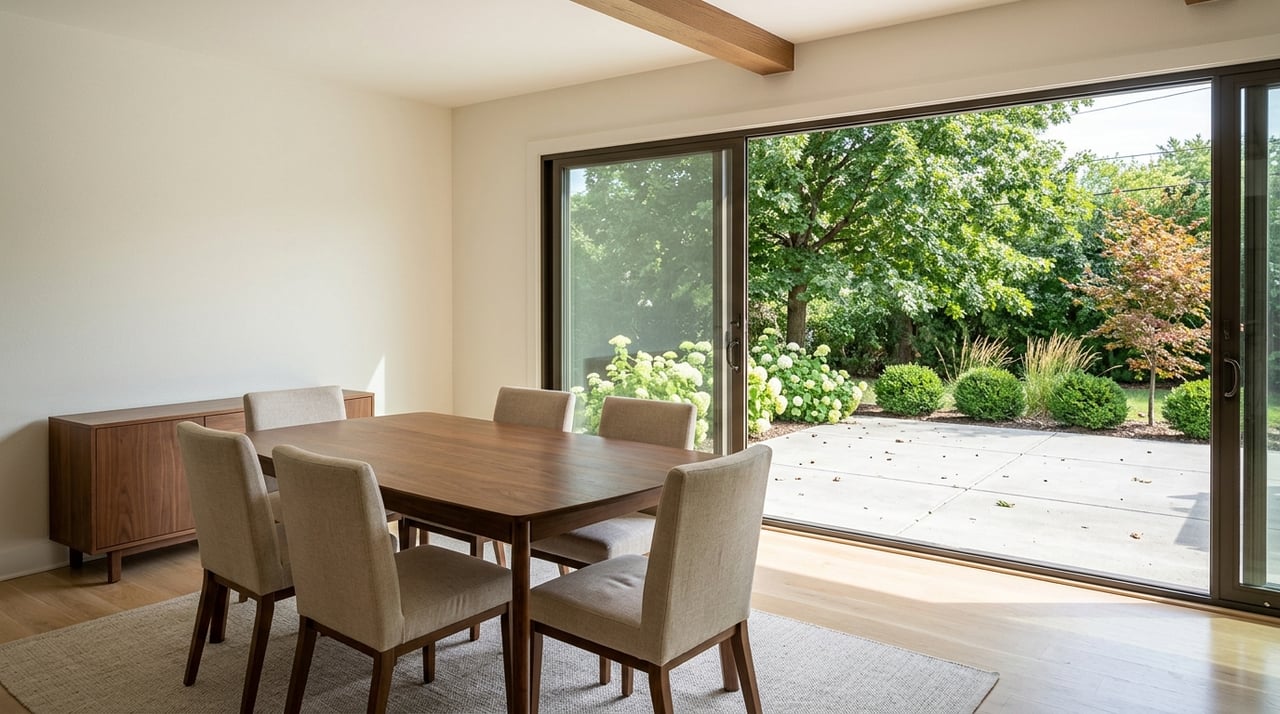
How To Read the Chesterfield MO Housing Market Before You Sell
April 2, 2026
April 2, 2026
Wondering whether Chesterfield is still strong enough to support your price, or whether buyers are getting pickier? If you are thinking about selling, that question matters more than ever. The good news is that Chesterfield remains active, but the smartest sellers are reading the market carefully before they list. Let’s dive in.
If you only look at one headline number, you can miss the real story. In early 2026, Zillow’s Chesterfield home value data puts the typical home value at $554,024, up 3.3% year over year.
At the same time, public portals show slightly different snapshots of supply and timing. Zillow shows 110 homes for sale and 41 new listings, while Realtor.com’s Chesterfield overview reports 167 homes for sale, a $600,000 median list price, and 32 median days on market.
That does not mean the data are unreliable. It means each platform uses different datasets and timeframes. For you as a seller, the most useful takeaway is the range: Chesterfield is active, competitive, and healthy, but it is not a market where every home automatically flies off the shelf for well over asking.
One of the clearest signals in Chesterfield right now is that most homes are selling close to list price. According to Redfin’s Chesterfield housing market report, homes sell for about 98.8% of list price, while Zillow reports a 0.992 median sale-to-list ratio and Realtor.com reports a 100% sales-to-list-price ratio.
That tells you something important. Buyers are still engaged, but they are not broadly rewarding overpricing. In a market like this, your initial price matters because it shapes early interest, showing activity, and negotiation leverage.
Redfin also reports that 35.7% of homes sold above list price, while 20.9% had price drops. In plain English, some homes still create urgency and competition, but others miss the mark and need an adjustment. That is why reading the market before you sell is less about guessing a high number and more about identifying the right pricing band from the start.
The first few weeks on the market often tell the story of your sale. Across the public data, the exact timing varies, but the pattern is consistent: early momentum matters.
Zillow’s Chesterfield data says homes go pending in about 17 days, while Redfin says homes sell in about 32.5 days and Realtor.com reports 32 median days on market. Those are different measurements, but they point in the same direction. Chesterfield is moving fast enough that your launch strategy has a real impact.
If your home is well prepared, well presented, and properly priced, you may capture the strongest buyer attention early. If not, you may lose momentum while newer listings enter the market. That is often when sellers start chasing the market with price reductions.
Chesterfield is still a competitive market, but not every listing performs the same way. Redfin gives Chesterfield a Compete Score of 81 and notes that many homes receive multiple offers. Realtor.com gives the market a Hotness Index of 87.
That sounds encouraging, and it is. But competitive does not mean automatic. It means buyers are active, yet they are still comparing condition, pricing, and presentation from one property to the next.
Redfin adds an especially useful benchmark for sellers. Hot homes can sell for about 2% above list and go pending in around 6 days, while the average Chesterfield home sells about 1% below list and goes pending in around 33 days. If you want top-tier results, your goal is not just to be listed. Your goal is to be one of the homes buyers feel they need to act on quickly.
Another trend sellers should watch is inventory. Realtor.com’s Chesterfield overview says active listings are up 15.08% year over year and 10.69% month over month.
More inventory usually means buyers have more choices. When that happens, pricing discipline and strong presentation matter even more. Buyers do not have to settle if several appealing options are available at once.
This is where a design-first approach can make a difference. When your home is thoughtfully prepared, visually clean, and marketed with a polished first impression, you give buyers a clearer reason to choose your property over the one down the street.
One of the biggest mistakes sellers make is treating Chesterfield like a single, uniform market. It is not. Your pricing strategy should reflect your specific ZIP code, property type, and immediate competition.
For example, Realtor.com’s local Chesterfield market data shows ZIP 63017 with a $599,450 median home price and 106 properties for sale, while ZIP 63005 shows a $1,087,500 median home price and 53 properties for sale.
That gap is significant. A citywide Chesterfield average can be helpful for context, but it is not enough to price your home confidently. A seller in one pocket of Chesterfield may be competing in a very different buyer pool than a seller just a few miles away.
Neighborhood-level differences matter too. Realtor.com shows Brandywine Condominiums with a $250,000 median home price and 57 days on market. That is a good reminder that attached homes, entry-level homes, move-up homes, and luxury properties can all behave differently, even within the same city.
It also helps to understand how Chesterfield stacks up against nearby markets. According to Redfin’s market data for Chesterfield, Chesterfield is moving faster and holding closer to list price than the city of St. Louis.
Redfin reports Chesterfield averaging about 1% below list and 33 days pending, compared with St. Louis city at about 3% below list and 41 days pending. For sellers, that reinforces an important point: Chesterfield is not a slow market. It is a stronger suburban market where buyers are active, but still selective.
Before you put your home on the market, it helps to read a few signals together instead of focusing on one number.
Here is what to watch:
When these signals are read together, they give you a clearer picture of how to position your home. That usually leads to better pricing, stronger early interest, and a smoother negotiation process.
Public data is helpful, but it only gets you so far. As the research sources themselves suggest, Zillow, Redfin, and Realtor.com each use different methods and reporting windows. That is exactly why a local pricing strategy should start before your list price is finalized.
A local agent can help you translate those public signals into a pricing band that fits your home, not just your ZIP code. They can also help you build a prep plan based on what buyers in your segment are responding to right now.
For many Chesterfield sellers, that includes more than pricing alone. It also involves presentation, selective updates, vendor coordination, launch timing, and an offer strategy built around current buyer behavior. Those decisions are often what separate a listing that sits from one that gains traction quickly.
If you want a thoughtful, design-forward plan for your Chesterfield sale, Christine Neskar can help you read the local market, prepare your home with care, and position it to compete from day one.
Stay up to date on the latest real estate trends.

With decades of experience, proven negotiation skills, and a deep understanding of the St. Louis market, this professional guides clients through smooth, successful real estate journeys.