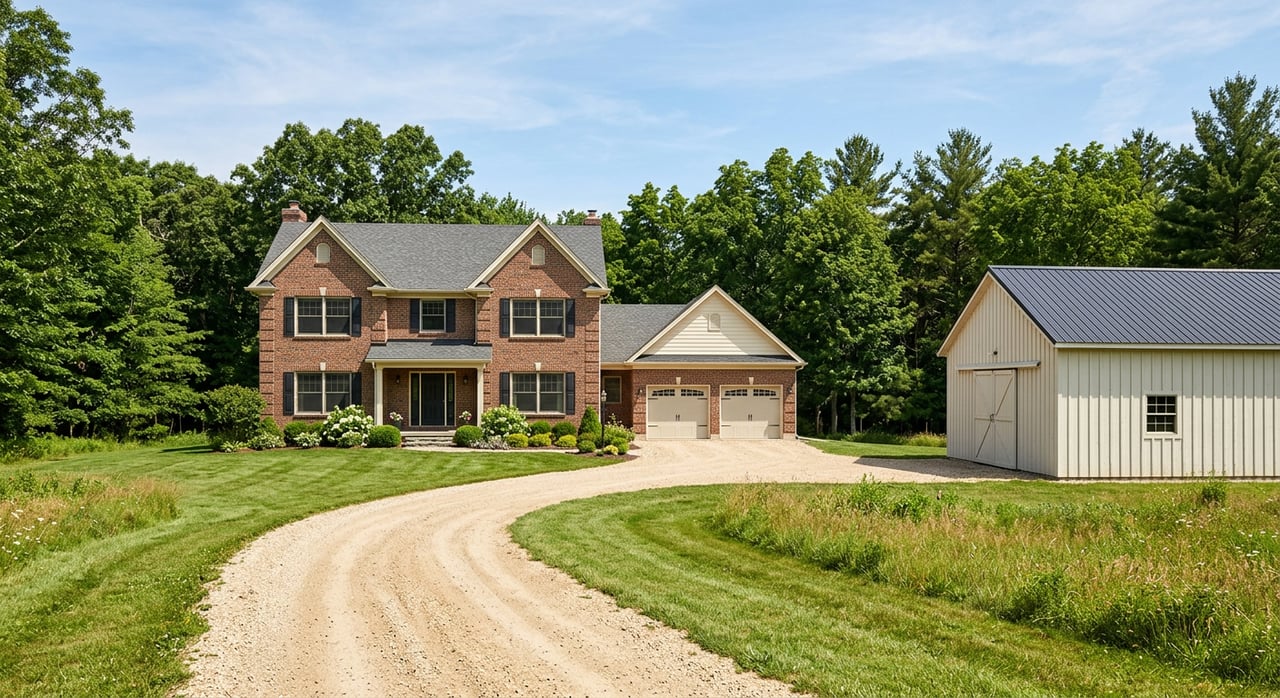
Essential Guide to Buying Acreage in Defiance MO
March 24, 2026
March 24, 2026
You picture trees, privacy, maybe a barn or an outdoor workshop. Buying acreage in Defiance can deliver that lifestyle, but the details behind utilities, access, and buildability matter more than you might expect. A little upfront homework can save you from costly surprises later.
In this guide, you’ll learn the key rules and checks specific to 63341, from the county’s septic requirements to floodplain risks and road access. You’ll also get a practical, step-by-step checklist you can use before you write an offer. Let’s dive in.
Before you fall in love with a view, confirm that your plan is feasible under St. Charles County rules. Parcel size, zoning, floodplain status, and utility options will shape what you can build and where.
Two points set the tone early: septic rules and land-disturbance permits. Both influence whether a lot can handle a home and how your site work must proceed.
If a parcel will use an onsite wastewater treatment system, the county follows Missouri’s design standards and requires permits for systems up to 3,000 gallons per day. Most importantly, new systems in St. Charles County require a minimum of 3 acres. If a public sewer is available within roughly 200 feet, the county typically requires a connection instead of a new OWTS. You can review these requirements in the County’s Community Development FAQ.
For lots without public sewer, plan for a soils evaluation and septic design based on the state’s guidance, known as the Green Book. The Missouri DHSS reference outlines how soil, slope, and system type affect design and sizing. You can explore the state criteria in the Missouri DHSS onsite reference.
Site work is reviewed in St. Charles County. Disturbing 5,000 square feet or more usually requires a county land-disturbance permit, and disturbance of 1 acre or more can trigger Missouri DNR review. Check with the County before you plan earthwork or driveway construction. Start with the County’s FAQ and permitting contacts.
Utility availability in Defiance varies by parcel. Do not assume a service is available until you confirm it with the provider.
Some parts of Defiance are served by local water districts. Public Water Supply District No. 2 serves portions of St. Charles County, including select Defiance areas. If public water is not available, private wells are common. Check availability directly with the district using PWSD No. 2’s site. For wells, confirm likely depth and yield with a licensed driller and plan for water-quality testing.
Ameren Missouri is the primary electric utility in this region. Ask Ameren to verify service and provide cost estimates for line extensions before you finalize a budget. Start with Ameren Missouri’s service information. Natural gas is provided by regional suppliers such as Spire in parts of St. Charles County, but many rural parcels use propane. Verify gas line availability or get a propane estimate if gas is not nearby.
Broadband coverage on acreage can be limited. Check provider maps for the exact address and confirm speed tiers in writing. Where cable or fiber is not available, explore fixed wireless or satellite as a backup plan.
Your property may front a county-maintained road, a MoDOT state route, or a private road. Each comes with different maintenance and permit needs.
Defiance sits near the Missouri River and multiple creeks. Portions of many parcels, and sometimes the potential building area, can be within FEMA flood zones. Before you assume a lot is flood-free, run the property through FEMA’s Map Service Center to locate the correct FIRM panel. If any development is proposed in a mapped flood zone, expect additional county permits and possible elevation requirements.
Soils and topography affect everything from driveway stability to septic design and erosion control. A site-specific soils evaluation is the best way to confirm a conventional drainfield will work. Missouri DHSS rules and county permitting processes require septic site evaluations, percolation tests, or soil morphology assessments as part of OWTS design. The state OWTS reference explains how soils guide system choice.
County zoning for rural parcels typically falls within A, R, or RR districts. These districts set allowed uses, minimum setbacks, and rules for accessory structures like barns or workshops. If you plan to keep animals, run a home-based business, or build large outbuildings, confirm what is allowed on your specific zoning designation through the County’s planning and code resources.
If you hope to subdivide later, know that a minor subdivision process is available for divisions of five acres or greater in appropriate zoning. How a parcel was created and which district it sits in will determine your options, so verify the recorded plat and zoning early.
Use this sequence to reduce risk and keep your planning clean:
Confirm parcel details. Pull the legal description, zoning, and GIS layers, and ask Planning & Zoning which uses are permitted for your parcel. Start with the County’s Community Development FAQ.
Order a title search. Look for access easements, utility easements, covenants, and liens. Note any exceptions.
Commission a boundary and topographic survey. Flag setbacks, slopes, drainage patterns, and any watercourses.
Check flood status. Verify the FEMA FIRM panel through the Map Service Center and note any county floodplain overlays.
Evaluate septic feasibility. Schedule a soils evaluation and confirm the county’s 3-acre minimum for new systems in areas without sewer. Review the state’s Green Book standards with your designer.
Confirm water source. Ask PWSD No. 2 about public-water availability and hookup steps. For wells, get driller input on depth and yield, and plan for water-quality testing.
Verify electric and gas. Request availability and extension cost estimates from Ameren Missouri and check natural gas availability or price propane alternatives.
Assess access and driveway permits. Identify whether your frontage is county, state, or private, and obtain the correct right-of-way and entrance permit info via the County’s FAQ.
Map the permit pathway. Call Building & Code Enforcement to confirm building, land-disturbance, floodplain, driveway, and OWTS permits. Review the county’s custom fire and building codes via County code updates.
Screen for environmental constraints. Ask about wetlands, stream setbacks, and any applicable Corps or state permits. Start with the County’s FAQ.
Confirm fire and emergency access. Identify the local fire district and any driveway or turnaround standards that apply to your build.
Build a realistic budget. Price long driveways, culverts, electric extensions, well drilling, and any alternative septic design.
Acreage projects often require line items that suburban lots do not. Plan for clearing, grading, erosion control, driveway construction, culvert work, and potential utility extensions. If septic soils are marginal, alternative systems can add cost. If public water is far, a well can be more economical but requires drilling and testing.
Your permit timeline will vary by scope and season. Build in time for soils work, surveys, and county review. Getting provider estimates in writing early helps you refine the overall budget and avoid delays.
Acreage success comes from strong due diligence and calm, organized execution. I help you verify buildability, coordinate soils and survey work, and line up provider estimates so you can budget with confidence. If you plan to build, I outline the permit path and connect you with vetted pros for septic design, driveway planning, and site prep.
You get boutique, hands-on guidance backed by decades of local experience and a trusted vendor network. When you are ready to explore acreage in Defiance, reach out to Christine Neskar to get a clear plan and a confident path forward.
Stay up to date on the latest real estate trends.

With decades of experience, proven negotiation skills, and a deep understanding of the St. Louis market, this professional guides clients through smooth, successful real estate journeys.